About
A petroleum products trading company, registered in Dubai.
SARL Investments FZCO buys and sells physical cargoes of refined petroleum products, concentrating on EN 590 10ppm ULSD. We are not a refinery and we do not present ourselves as one — we are a trading company, and the value we add is in sourcing, structuring and executing transactions that both sides can actually complete.
What we do
Physical cargoes, not paper
We trade physical product. A transaction ends with a cargo loaded onto a vessel or transferred between tanks, with a bill of lading and an independent inspector's certificate to evidence it. That is a deliberately narrow description, and it excludes a good deal of what gets called trading in this market.
EN 590 10ppm ULSD is what we concentrate on, and it accounts for most of our enquiries. Our working structure for it is FOB vessel to tank at Jurong: the cargo is injected into the buyer nominated shore tank, SGS determines quantity and quality there, and the purchase price sits in a Singapore escrow account until those conditions are satisfied. Jet A-1 is traded alongside it, by the barrel rather than the tonne.
Other products are available on request. We would rather list two grades we can actually deliver against than publish a catalogue of everything the industry trades, which is what most sites in this market do and what makes them impossible to take seriously.
We sell FOB from Houston, Jurong, Fujairah and Rotterdam, and from CIS ports, and CIF or CFR to a named discharge port. Where storage is in place for a particular transaction, a tank take over or a tank-to-tank transfer can be arranged case by case.
Why Dubai
What an FZCO is, and why it matters for this trade
A Free Zone Company is a legal form available in the United Arab Emirates within a designated free zone. It can be wholly foreign-owned, it holds and contracts in foreign currency without restriction, and goods can move through the zone in transit without entering the domestic customs regime. Profits are repatriable. Those are the mechanics; the reason they matter is that physical commodity trade is a business of holding foreign currency positions and moving goods that never touch the country the contract is written in.
The geography reinforces the structure. Dubai sits a few hours from the Gulf loading ports, on the direct routing between CIS supply and Asian and East African demand, and beside Fujairah — the largest bunkering hub in the Middle East and, being outside the Strait of Hormuz, a materially different risk proposition to a Gulf port during a disruption.
The result is that a large share of the physical energy trade between Russia, the Gulf, Africa and Asia is booked through Dubai companies. It is a practical advantage in settlement, documentation and time zone rather than a mark of quality, and it should be read that way.
How we work
Counterparty verification, in both directions
Before we contract with a buyer we establish that the company exists, that the person signing can bind it, and that it can pay. In practice: certificate of incorporation or trade licence, passport copy of the authorised signatory, and either a bank comfort letter or evidence of the ability to open the agreed payment instrument. Depending on destination and product we will also need to know the end user and the intended use, because sanctions and export control obligations attach to both.
You are entitled to run exactly the same checks on us, and we would think less of a counterparty who did not. A seller who demands full disclosure from a buyer while declining to identify themselves is telling you something.
Every cargo is checked for origin and against the applicable sanctions position before an offer is made. Where a transaction cannot be cleared, we decline it. That is occasionally an expensive answer to give and it is not negotiable.
Documentation
The document set is the transaction
Physical cargo business settles on documents. The bill of lading, the commercial invoice, the certificate of origin and the independent inspector's certificates of quantity and quality are what the bank examines and what releases payment. A document set that does not conform is a set that does not pay, however good the underlying cargo.
We prepare the set the contract calls for and present it under the payment instrument. Where a buyer's letter of credit calls for a document that cannot realistically be produced for the trade in question, we raise it before the credit is opened rather than at presentation, when it is expensive to fix.
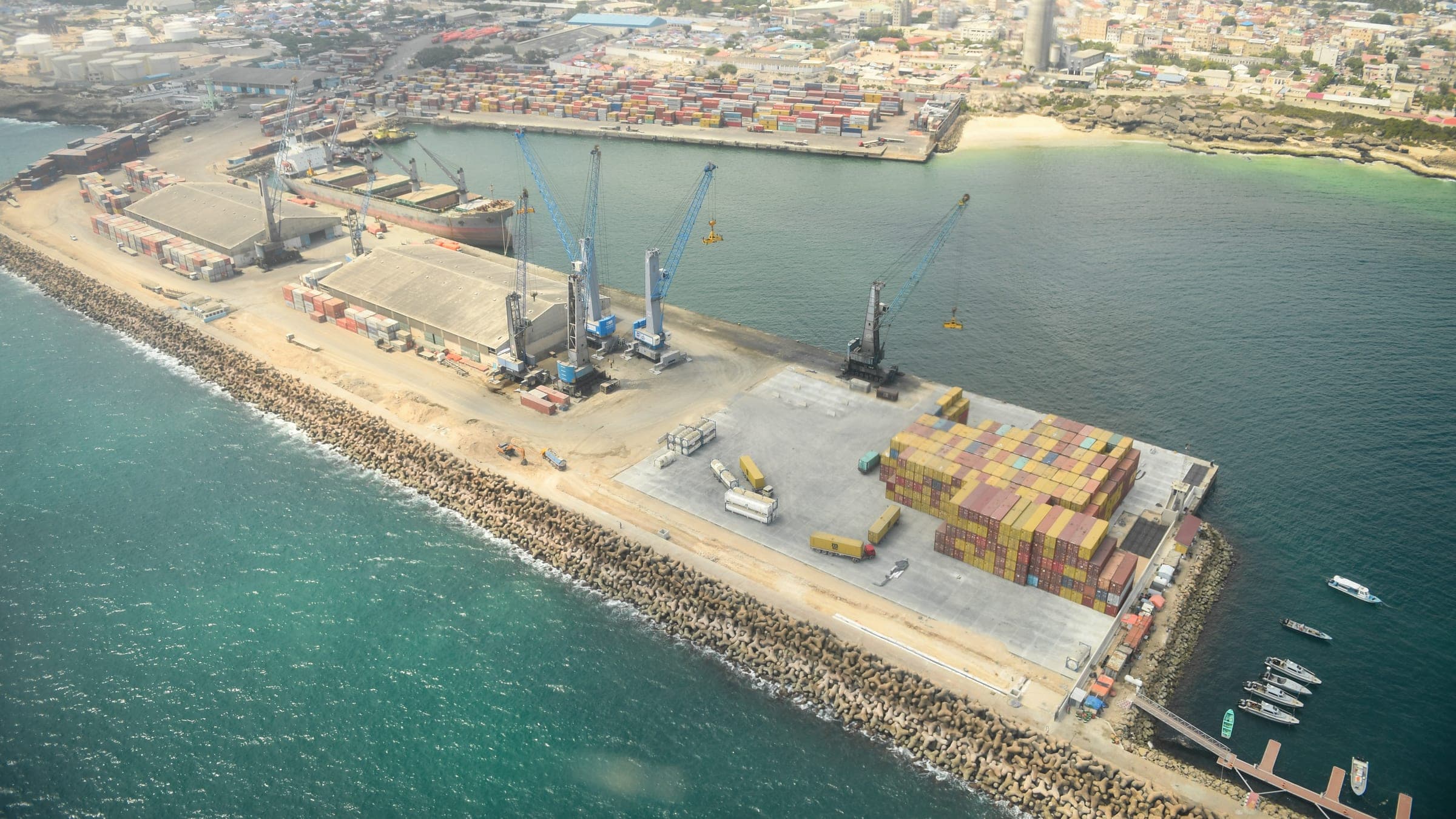
Port terminal, illustrative
What we do not do
Things you will never be asked for
Every item below is a standard feature of the frauds that run in this market. None of them will come from us, and you should treat any counterparty who raises one as a warning.
- No fee of any kind before a contract is signed
- No registration fee, application fee, allocation fee, tank rental deposit, or payment to release proof of product. The only costs you should incur before delivery are ones you pay third parties directly and can verify yourself — your own bank's charges and your own inspector's fee.
- No unverified offers or forwarded allocations
- We do not circulate soft offers on cargoes we have not verified, and we do not pass on an allocation letter that arrived from someone we cannot identify. If we quote you, we can tell you where the product is and how it gets to you.
- No chains of intermediaries
- We will work with a broker who is genuinely introducing a buyer and can demonstrate the mandate. We will not join a chain in which nobody has contact with the end buyer. Those transactions do not close, and everyone involved wastes several weeks discovering it.
- No firm price without a named discharge port
- Freight is usually the largest variable in a delivered price, so a firm CIF ASWP number cannot be meaningful. We will give an FOB price and an estimated freight instead, and be clear about which is which.
- No pressure to skip verification
- There is no cargo so urgent that it justifies bypassing counterparty checks, independent inspection or a payment mechanism that pays against documents. Urgency used as a reason to skip a safeguard is the oldest signal there is.
Enquiries
Tell us what you need to buy.
An enquiry naming the product, the quantity, the destination port and the delivery term can be answered the same week. One missing two of those four generates a round of questions before anything can move.